Feed Enzymes Market: Process Guide for Poultry Feed
Practical feed enzymes market guide for poultry feed manufacturers: enzyme selection, process conditions, QC, cost-in-use, and supplier qualification.
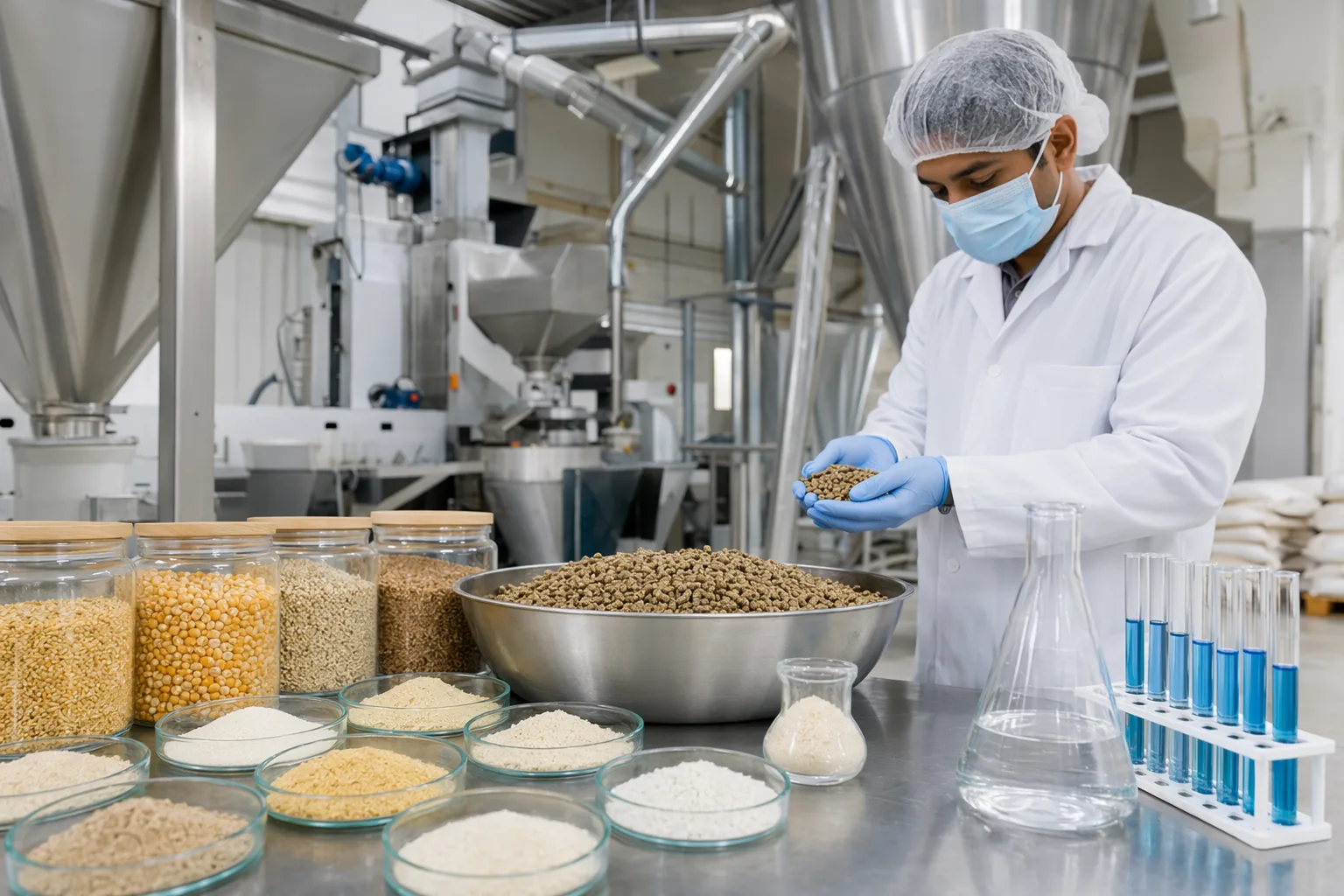
For poultry integrators, premix companies, and feed mills, the feed enzymes market is best evaluated by application performance, processing stability, documentation quality, and verified cost-in-use. Feed mills, premix makers and distributors can request a quote with the product, quantity and destination.
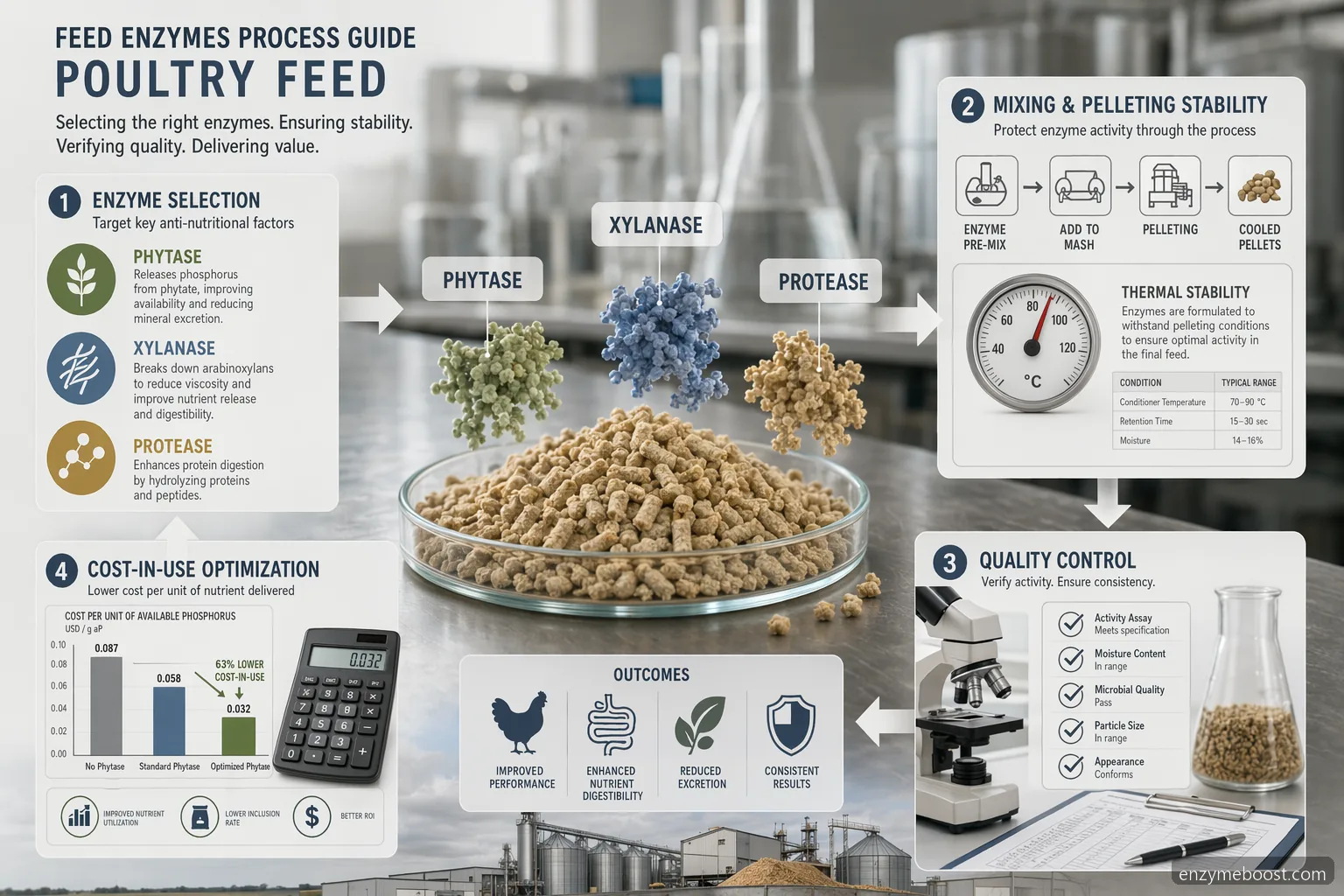
Why the Feed Enzymes Market Matters to Poultry Producers
The feed enzymes market is driven by the need to release more usable energy, amino acids, phosphorus, and minerals from common poultry feed ingredients. In broiler and layer diets, enzymes are normally selected to act on phytate, non-starch polysaccharides, proteins, or fiber fractions that birds cannot efficiently digest alone. For B2B buyers, the question is not simply whether an enzyme is available, but whether it performs in the actual formulation, mill process, and feeding program. The global feed enzymes market includes dry powders, coated products, granules, and liquid post-pellet applications. Each format has different implications for dosing accuracy, pelleting survival, worker handling, and inventory control. A sound feed enzymes market analysis should connect enzyme activity to ingredient variability, such as wheat, corn, soybean meal, DDGS, rice bran, or alternative proteins.
Focus on measurable nutrient release and feed conversion impact. • Check compatibility with premix carriers, minerals, acids, and medications. • Evaluate enzyme format against your mill layout and pelleting temperature.
Selecting Phytase, Xylanase, and Protease for Poultry Feed
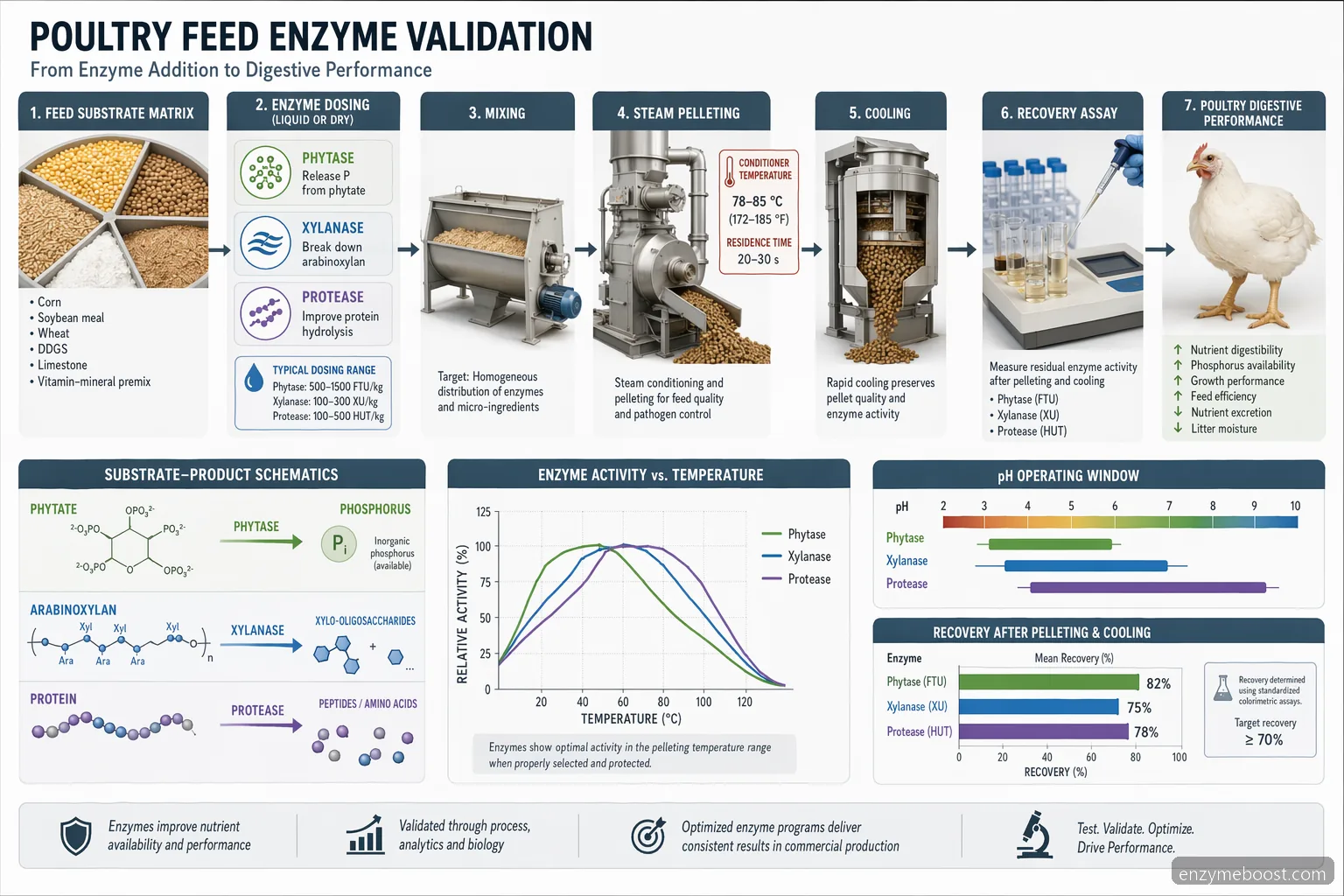
Phytase feed applications are commonly used to improve phosphorus availability and reduce inorganic phosphate inclusion. Typical commercial dosing may range from about 500 to 1,500 FTU/kg finished feed, but the correct level depends on formulation matrix values, phytate content, and supplier TDS recommendations. Xylanase poultry feed use is most relevant in wheat, rye, barley, corn by-product, or high arabinoxylan diets; common inclusion bands vary widely by activity method, so buyers should compare declared units carefully. Protease may support protein digestibility where soybean meal quality, heat damage, or alternative protein sources create variation. Poultry digestive conditions are broad: the gizzard can be acidic, around pH 2.5-4.5, while intestinal activity often requires performance around pH 5.5-7.0. Enzymes should be screened for activity across the pH and temperature conditions expected in birds and in feed manufacturing.
Use phytase when phosphorus release and mineral cost control are primary goals. • Use xylanase when viscous grains or NSP-rich ingredients are significant. • Use protease when protein quality or amino acid digestibility is a key risk.
Process Conditions: Mixing, Pelleting, and Recovery
Industrial enzymes for feed industry market evaluation must include mill-process validation. Dry enzymes are usually added through micro-ingredient systems or premix dilution, where uniformity depends on particle size, carrier compatibility, and mixer performance. A coefficient of variation below 10% is a common mixing target for micro-ingredients, though internal specifications may be tighter. Pelleting is the main stress point. Poultry feed conditioning often runs around 75-90°C for 20-60 seconds, with higher temperatures possible depending on pathogen-control programs. Enzyme recovery should be tested after conditioning, pelleting, cooling, and storage, not only at the mixer. Heat-stable coatings or granulation may improve survival, while liquid enzymes can be applied after pelleting when the plant has accurate spray equipment. Buyers should define sampling points, analytical methods, and acceptance limits before starting commercial supply.
Confirm enzyme recovery in finished pellets, not only in premix. • Record conditioner temperature, retention time, moisture, and pellet die conditions. • Validate liquid spray uniformity if using post-pellet application.
QC, Documentation, and Supplier Qualification
Strong supplier qualification is essential in the animal feed enzymes market because declared activity, assay method, and stability can differ between suppliers. Request a current COA for each lot, a TDS with activity definition and dosage guidance, and an SDS for safe handling, storage, and spill response. The COA should state enzyme activity, batch number, manufacturing date or retest date, and any relevant physical parameters such as moisture or appearance. The TDS should explain recommended pH range, thermal tolerance, storage conditions, and compatibility limitations. During qualification, audit the supplier’s change-control process, lot traceability, complaint handling, and ability to support feed mill troubleshooting. Avoid relying only on feed enzymes market share claims; procurement decisions should be based on documentation, pilot results, analytical reproducibility, and continuity of supply.
Require COA, TDS, SDS, activity method, and shelf-life statement. • Assess traceability, change notification, and technical support capability. • Keep retained samples for dispute investigation and stability checks.
Pilot Validation and Cost-in-Use Analysis
A practical feed enzymes market trends review should end with pilot validation and cost-in-use modeling. Start with a control diet and one or more enzyme treatments using the supplier’s recommended dosage and your nutritionist’s matrix values. Measure enzyme recovery after pelleting, feed moisture, pellet durability, bird weight gain, feed conversion ratio, litter observations, and phosphorus or nitrogen outputs where relevant. For cost-in-use, include enzyme price, actual dose, nutrient matrix savings, phosphate or oil reduction, handling losses, inventory cost, and any equipment changes. The US feed enzymes market and global feed enzymes market both include products with different activity declarations, so price per kilogram can be misleading. A higher-priced enzyme may be economical if it delivers lower inclusion, better pelleting recovery, or more consistent formulation savings under your operating conditions.
Run side-by-side feed mill and animal-performance validation. • Use the same assay method when comparing enzyme recovery. • Calculate cost per metric ton of finished feed and net formulation savings.
Technical Buying Checklist
Buyer Questions
Compare suppliers by application data, declared activity method, pelleting recovery, documentation, and technical support. Request COA, TDS, SDS, shelf-life data, and storage requirements for each product. Then run pilot production under your actual mixing and pelleting conditions. The best supplier is not always the lowest price per kilogram; cost-in-use, recovery, consistency, and supply reliability are more important.
The most important conditions are mixing uniformity, conditioning temperature, retention time, moisture, pellet die conditions, cooling, and storage. Poultry feed pelleting often exposes enzymes to about 75-90°C for 20-60 seconds, but each mill is different. Enzyme recovery should be measured in finished feed using an agreed assay method, because mixer-stage activity does not prove post-pellet performance.
Phytase is valuable when the goal is phosphorus release from phytate, but it does not replace every other enzyme need. Diets with wheat, barley, rye, or high by-product inclusion may benefit from xylanase or beta-glucanase. Diets with variable protein quality may justify protease evaluation. Enzyme selection should follow substrate analysis, nutrition targets, and controlled feed mill and bird-performance trials.
Feed enzymes market trends include greater use of multi-enzyme systems, higher interest in nutrient matrix optimization, and more attention to heat stability and analytical verification. For buyers, these trends mean procurement should work closely with nutrition, QA, and production teams. Market claims should be tested against your ingredient profile, pelleting conditions, regulatory destination, and measurable cost-in-use.
Feed-Grade Enzyme Blends for Research & Industry
Need Feed-Grade Enzyme Blends for your lab or production process?
ISO 9001 certified · Food-grade & research-grade · Ships to 80+ countries
Frequently Asked Questions
How should a poultry feed mill compare enzyme suppliers?
Compare suppliers by application data, declared activity method, pelleting recovery, documentation, and technical support. Request COA, TDS, SDS, shelf-life data, and storage requirements for each product. Then run pilot production under your actual mixing and pelleting conditions. The best supplier is not always the lowest price per kilogram; cost-in-use, recovery, consistency, and supply reliability are more important.
What process conditions matter most for feed enzymes?
The most important conditions are mixing uniformity, conditioning temperature, retention time, moisture, pellet die conditions, cooling, and storage. Poultry feed pelleting often exposes enzymes to about 75-90°C for 20-60 seconds, but each mill is different. Enzyme recovery should be measured in finished feed using an agreed assay method, because mixer-stage activity does not prove post-pellet performance.
Is phytase feed use enough for all poultry formulas?
Phytase is valuable when the goal is phosphorus release from phytate, but it does not replace every other enzyme need. Diets with wheat, barley, rye, or high by-product inclusion may benefit from xylanase or beta-glucanase. Diets with variable protein quality may justify protease evaluation. Enzyme selection should follow substrate analysis, nutrition targets, and controlled feed mill and bird-performance trials.
How do feed enzymes market trends affect purchasing?
Feed enzymes market trends include greater use of multi-enzyme systems, higher interest in nutrient matrix optimization, and more attention to heat stability and analytical verification. For buyers, these trends mean procurement should work closely with nutrition, QA, and production teams. Market claims should be tested against your ingredient profile, pelleting conditions, regulatory destination, and measurable cost-in-use.
Request a quote
Request a technical review for your poultry feed enzyme program, including COA/TDS/SDS screening, pilot validation, and cost-in-use modeling. See our application page for Enzyme Solutions for Liver-Support Pet Diets for specs, MOQ, and a free 50 g sample. To request a quote, send the product, the quantity and the destination.
Contact Us to Contributehello@mail.enzymeboost.com